 StartEase
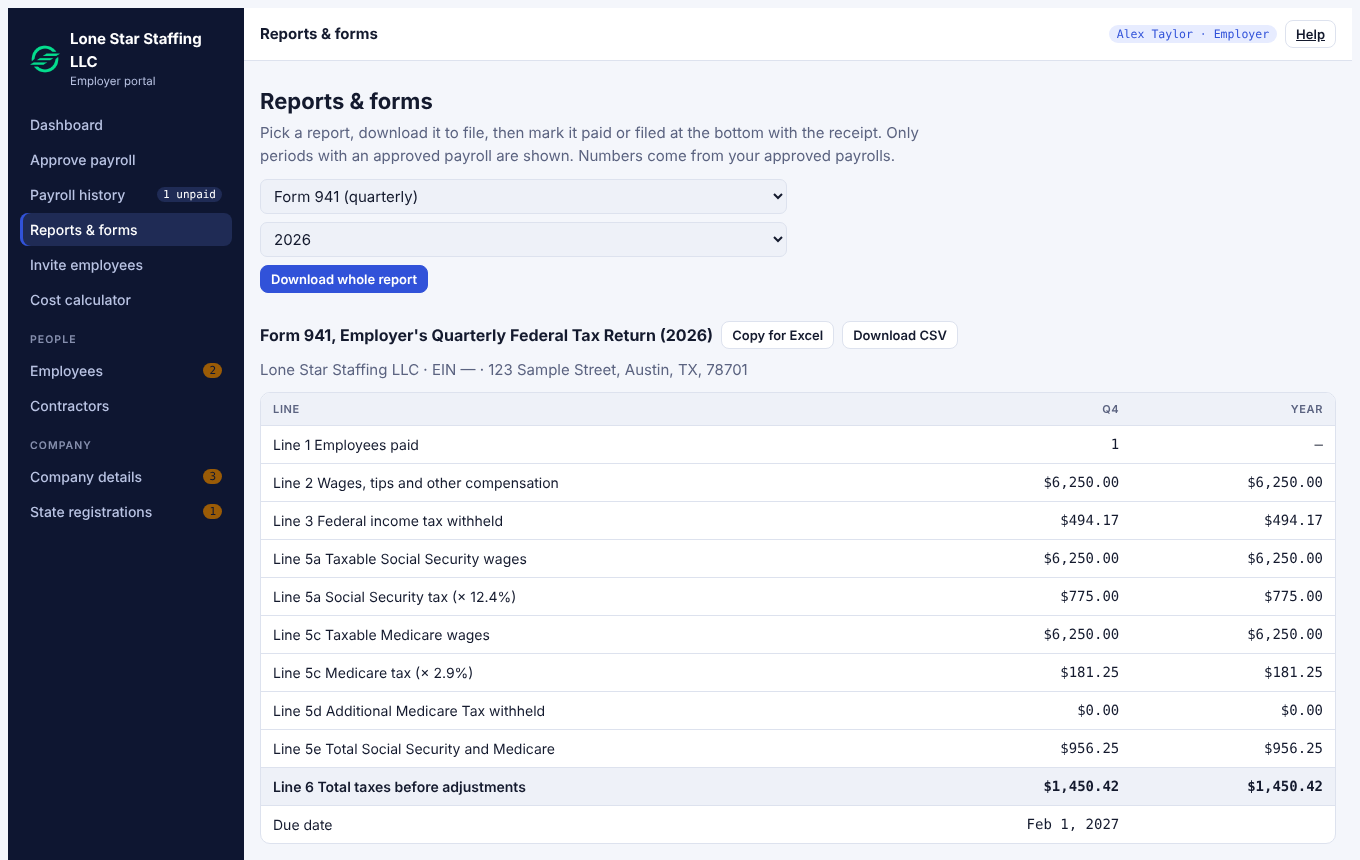
Federal tax deposits and Form 941
How often to deposit federal payroll tax, when it is due, and how Form 941 fits in.
Two different things
- Deposit: a payment of the federal income tax withheld plus Social Security and Medicare (both the employee's and your share). It is not a return.
- Form 941: the quarterly return that reports the same totals. The deposits you made are matched against it.
When to deposit
The IRS assigns your schedule from a lookback period (the 12 months from July 1 to June 30 before the year). The Monthly tax deposits report shows which schedule applies (for example "Monthly schedule") and each due date.
| Schedule | When | Due |
|---|---|---|
| Monthly (taxes of $50,000 or less in the lookback period) | Pay dates in a month | The 15th of the next month |
| Semiweekly (more than $50,000) | Wednesday to Friday pay dates Saturday to Tuesday pay dates | The next Wednesday The next Friday |
| Next-day | $100,000 or more of tax on any day | The next business day, on either schedule |
A due date that falls on a weekend or legal holiday moves to the next business day. Deposits are made electronically through EFTPS.
Form 941 due dates
| Quarter | Due |
|---|---|
| January to March | April 30 |
| April to June | July 31 |
| July to September | October 31 |
| October to December | January 31 |
If you deposited every payment on time, you have about 10 more days to file. If the due date falls on a weekend or holiday, it moves to the next business day.
What to do in the portal
- Open Reports & forms and choose Monthly tax deposits.
- Pay the amount shown by the due date through EFTPS.
- Mark the deposit paid with the date, confirmation number and receipt.
- Each quarter, choose Form 941, use the totals to file the return, then mark it filed.
Employers must deposit withheld income tax and Social Security and Medicare taxes on the schedule the IRS assigns, and file Form 941 each quarter.
Sources (government sites):