 StartEase
FUTA and Form 940: federal unemployment tax
What FUTA is, why paying your state unemployment tax on time lowers it, and when Form 940 is due.
What FUTA is
The Federal Unemployment Tax Act (FUTA) tax is paid only by the employer. It is not taken from employees. It applies to the first $7,000 of each employee's pay in the year.
The rate
- The FUTA rate is 6.0%, but you get a credit of up to 5.4% for state unemployment tax you paid on time. The usual net rate is 0.6%, which is $42 per employee at most.
- The credit is smaller if you pay the state late.
- In a "credit reduction state" (a state that has not repaid a federal loan for its unemployment fund) the credit is lower and you owe more. The IRS lists these states each year.
Why StartEase needs your state rate first
Your state unemployment payments are what earn you the credit. That is why the payroll cannot be approved until your state unemployment rate is on file. See Send your state unemployment rate notice.
In the portal
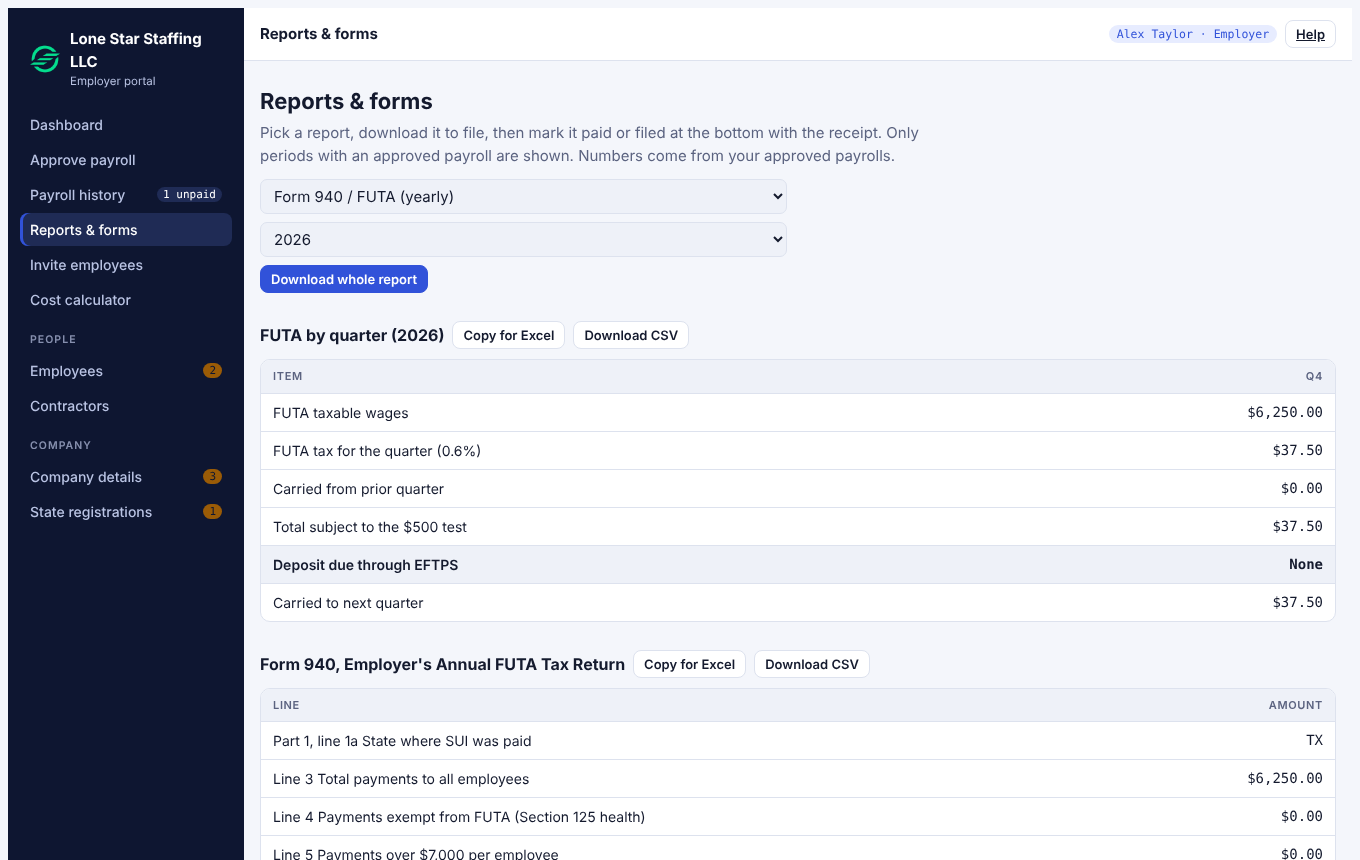
- Open Reports & forms and choose Form 940 / FUTA (yearly).
- Use the by-quarter totals to prepare Form 940.
- File by January 31 after the year ends (10 extra days if you deposited all FUTA on time). Mark it filed with the confirmation and receipt.
If you paid wages in more than one state, or in a credit reduction state, you also file Schedule A (Form 940).
State unemployment reports
Choose State unemployment (quarterly) for the wages and tax to report to each state agency. The state tells you where and when to file.
Employers owe federal unemployment tax on the first $7,000 of each employee's wages. A credit for state unemployment contributions paid on time reduces the net rate to 0.6%. Form 940 is filed once a year.
Sources (government sites):